Showing posts with label Fishing Knot. Show all posts

Tuesday, April 26, 2011

Tying Fishing Knots - Why Learning How To Tie Fishing Knots Is So Important

I have been fishing for more than two decades and in that time have learned how important tying various fishing knots is when you are out of the water fishing. In this article I will outline some of the best reasons I've learned for tying various fishing knots in various fishing situations. When you are out on the water fishing you never know exactly what you are going to encounter and if you only know one way of attaching a piece of terminal tackle, fishing lure, or one length of line to another, you are going to be in trouble.
If you only know one method of attachment for example, what do you do when you switch from worm fishing with gang hooks for trout to fishing a crank bait for bass? In this scenario if you only know one fishing knot you are more than likely using a knot that it much less strong than it should be in one fishing situation or the other. There simply isn't one "magic knot" that will work in all fishing situations, although many anglers tend to think this is the case.
Tying fishing knots is an extremely important skill to have as an angler and knowing at least three different methods of attaching line to tackle is of the utmost importance in my opinion. In reality an angler should know more than three, but three will suffice for most fishing scenarios.

One of the biggest mistakes I see among anglers is the use of the snap swivel. Novice anglers like to tie on a snap swivel onto their fishing line and then snap on whatever fishing lure of piece of terminal tackle they want to use onto the swivel. While this is the "easy" way to go, it is not at the best way to go. The reason people use snap swivels is because they aren't interested in tying fishing knots, which simply makes no sense.
You can learn a few different ways of attaching tackle quite easily and subsequently retire snap swivels forever. If you use a snap swivel to hook a lure onto your fishing line you are effectively ruining the "action" of that lure. If you use a snap swivel in place of a knot with almost any kind of terminal tackle you are making you're offering much more visible underwater and appear completely unnatural to the fish you are attempting to catch. For these reasons, learning how to tie fishing knots is of the utmost importance to anglers.
While having a large number of ways to attach tackle in the old "memory bank" is great and incredibly useful while fishing, just knowing three or four of the most popular fishing knots will more than suffice. Just think about the style of fishing that you enjoy most, get your hands of a fishing knot tying guide of some sort,and pick the three or four fishing knots that make the most sense to you and your personal fishing style. Start practicing and learning these fishing knots and you will be good to go.

Trevor Kugler is co-founder of JRWfishing.com and an avid angler. He has more than 25 years experience fishing for all types of fish, and 15 years of business and internet experience. He currently raises his five year old daughter in the heart of trout fishing country.
Get trout fishing tips twice a month for FREE
See my previous post:

Fishing Knots: Important One

Fishing knots: An average angler needs three to four fishing knots and that help him to end up doing all his/her angling job. But choosing your knots is directly related with the mode of fishing you are prone to. But knowledge is always bliss, and it in the same way an angler will be helping him/herself along with others all the more if he/she is aware about other fishing knots that may not so important for their day to day job. This article will help you to know few fundamental knots and their tying techniques.


Few knots are discussed below:

Albright Knot:
Versatility and wide range of usage make the albright knot a preferred option for anglers. The knot is even more popular as it is easy to tie and can be attached to different types of lures. Monofilament, braided or braided to wire are the fishing lines, the knot is usable with. Albright knot is popular in joining a fly line to the backing line. Anglers also use the knot to join two fishing lines together.


Palomar Knot:
The palomar is a kind of fishing knot which is simple in nature and an easy one to tie. Anglers use it for attaching a line to a hook. It is also used in attaching a fly to a leader or tippet as well. Palomar knot is regarded as one of the strongest fishing knots and it is the most reliable one as well. This particular knot is recommended to be used with braided lines.


Uni Knot:
Uni-knot is regarded as one of the best fishing knots. The knot is loved by most of the anglers as it help to withstand sudden jerks. And it works wonderfully well, in-fact better than other knots. This strong knot can be used in a number of applications. Most of the angers use it for tying fishing line to terminal tackle.
Uni-knot is the kind of fishing knot that can be used with both braided lines as well as monofilament fishing lines. As these knots can be directly tied to the hooks eye, in traditional manner, so these work perfectly fine with any kind of loop.


Dropper Loop:
Dropper loop is an equally popular fishing knot. This knot is mostly used to attach additional flies, baits or jigs to a single fishing line. These types of fishing knots are made long enough allowing a hook to set directly on the line. But it is clever not make too many loops as maximizes it the risk of fouling and twisting.


Clinch Knot:
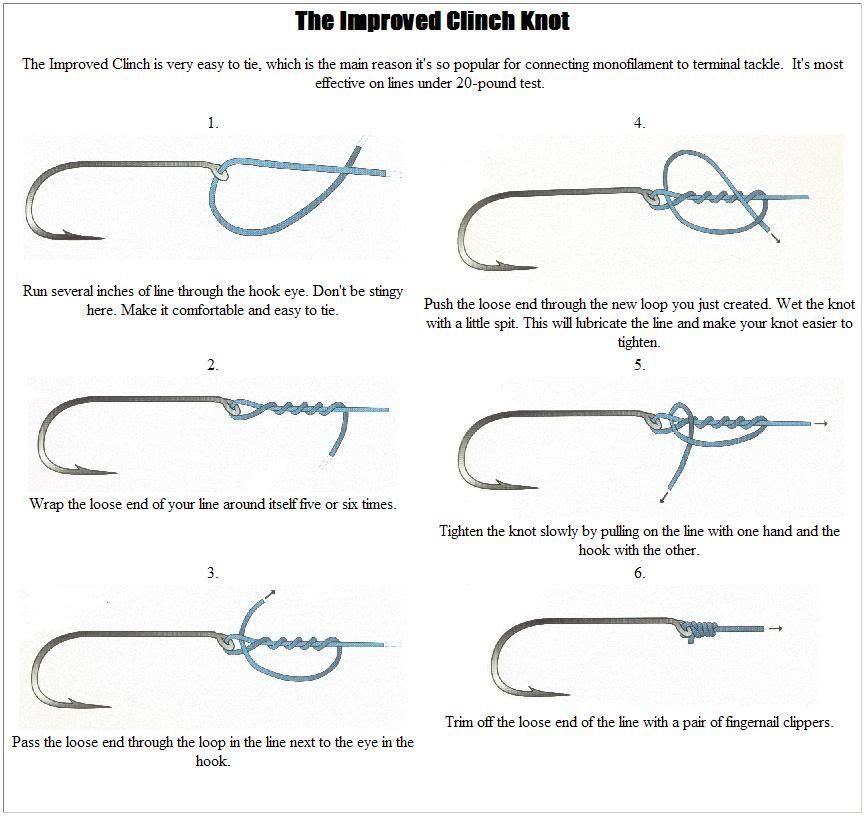
Clinch knot is the simplest knot and that's what makes it the most preferred fishing knots used today. Anglers love this knot as it never slips if you tie it properly. This fishing knot make easy to use a lure for fishing.


Rapala Knot
Rapala is a knot which derived its name from the company which made the type of knot popular. Connecting lures to the monofilament is the main purpose of the knot. Rapala knots should be directly attached to the lures and these knots help the purpose even better as these are non-slippery in nature. Lures that can be added with these knots are swivel or leaders.


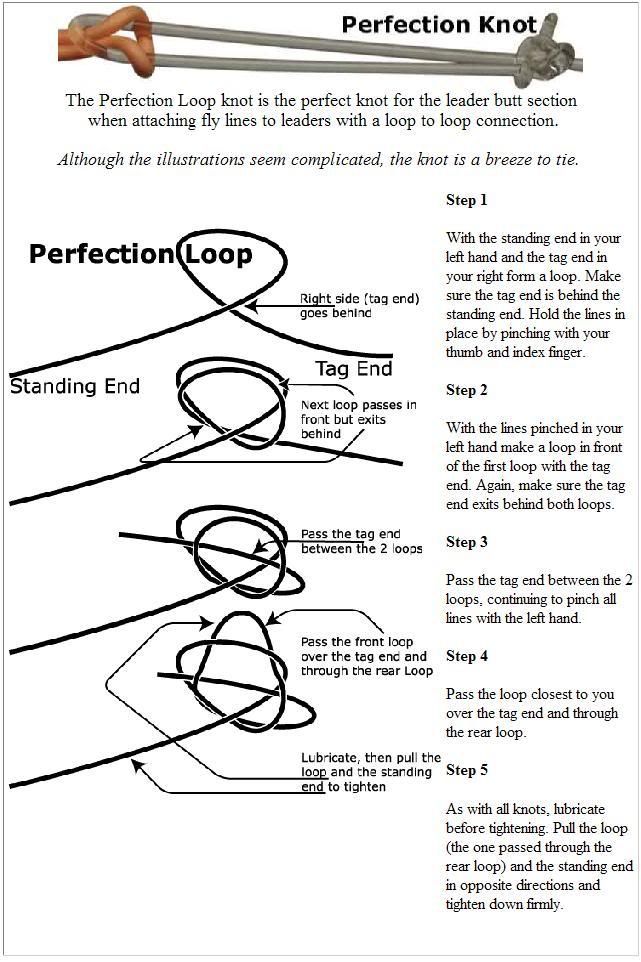
Perfection Loop
The Perfection Loop is a kind of fishing knot which is really easy to tie. This one is in-fact the easiest one to tie and has got a small loop. This loop helps to tie leader or tippet at its end. It has got a standing end and it lies perfectly there.


Double Uni Knot:
Both salt and fresh water anglers rely on Double Uni knots. These fishing knots come handy in joining lines with similar or different kind of lines. The knot is popular among anglers as it works well every time. Undoubtedly it is easier to tie than most of other knots.


Grinner Knot:
Multi-usage is making the grinner knot a popular option. This breakage proof knot comes with 100% assurance and it is easy to tie. This fishing knot is usable with lures, hooks and swivels which are to be attached with the main line. Using lubricant to tie the knot is a preferred exercise and this will help you to tighten the knot no get good results.


Surgeon Knot:
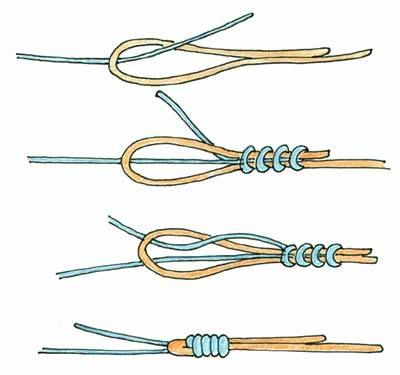
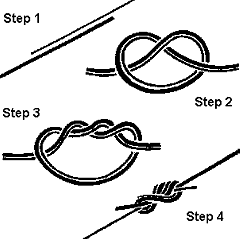
Surgeon knot is a multipurpose fishing knot. Most of the time it is used in joining similar as well as different size of loops. This carries almost 100% breaking strength. Its usability is high as its super easy to tie. One just need to take two line to be held parallel and make an overhand loop. After that you need to bring the entire line till the end through the loop. Repeat the process once again. Pull the ends through your index finger & thumb. Tighten the loop and trim the extra ends.

The author writes on Marine, Fishing, Boating and related topics for many reputed publishers such as, Marinews.Com.
See my previous post:

Common Fishing Knots - Tying a Lure to the Line

Every fisherman should understand the importance of tying proper knots when tying a lure to the line. Without a good solid knot even an expert will lose fish. Lures will be lost as well, and some lures are expensive or have sentimental value to their owners.
It's good practice to know at least a couple different trustworthy fishing knots. A lot of people use the simple granny knot technique, but tying the fishing line over and over like that creates weak spots in the line and can break easily.
The most common fishing knots used by fisherman when tying a lure to the line are the Palomar, Trilene, Snell, and Clinch knots. There are also the Albright, Wedge, and Baja knots too. Only the first three knots will be discussed.


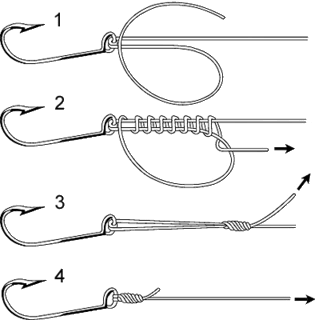
The Palomar is up first and is a personal favorite. It is fairly straightforward and is definitely very secure. Create a loop with the line and put it through the eye of the hook or lure. Make sure the loop is large enough to tie a knot with as this is the next step.

Tie a simple knot using the looped line but do not pull it tight. Take the first loop made and pull the hook or lure through it.
Now grab the standing line, the hook, and the end of the fishing line and start to pull all three evenly until the knot is tight. Cut off some of the excess line and the knot tying process is complete.
The first step in the process of creating a Trilene knot is to loop the line through the hook twice. Now make five or six wraps around the standing line and feed the end of the fishing line back through the double loops made in step one.
Like the final stage for creating the Palomar knot, grab the standing line, hook, and the line's end and pull evenly until the knot is tight. Sometimes this can be a little difficult and some water or saliva can make things easier.
Tying a Snell knot can be a little more involved and starts by pulling the line through the eyelet and then creating a loop behind the eyelet that rests against the shaft of the hook.

Wrap the end of the fishing line both around the shaft of the hook and through the loop created in the previous step. Do this three or four times. Tighten the newly made coils and slide them closer to the eyelet by alternately pulling the end of the line and the standing line until it is snug.
Things are only as strong as their weakest link. The purpose of this tutorial was to provide a list of common fishing knots that will ensure that the connection between lure and line doesn't cost anglers their catch.

Gordon has been writing articles online for nearly 4 years now. Not only does this author specialize in fishing, interior design, and home renovations, you can also check out his latest website on vacuum cleaners ratings which reviews and rates the latest canister vacuum cleaners.
See my previous post:

Fly Fishing Knots for Every Angler

Regardless of your level of expertise, it is important as an angler to be familiar with a few different fly fishing knots as well as their special uses. Learning how to tie your own knots is a skill you can learn with practice and gives you the confidence and satisfaction to go beyond the basics.

Tying a blood-knot is a valuable skill for any angler to learn, but it requires a bit of practice to tie this type of knot without special fly fishing tools. The blood knot joins a pair of monofilament lines, yielding a compact knot with excellent tensile strength for a straight fly line. Practicing this knot without fly equipment is very time-consuming but proves to be extremely valuable.
The surgeon-knot is similar in strength to a blood knot. However because it is simpler to tie it is also more bulky, yielding a line that is slightly angled.
So-named because of the needle required for threading the monofilament line, a needle-knot yields a tidy, straight knot characterized by the strong transition between the leader and fly line.
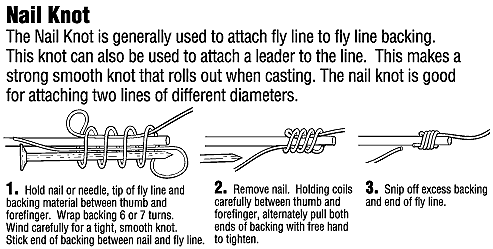
No needle is necessary when tying a nailless-nail-knot. Since this type of knot is tied around the fly line it is unreliable in comparison to a needle-knot. The nail-knot is vulnerable to slippage if the fly line coating detaches.
Finally, the perfection-knot gets its name from its perfectly even and secure loop configuration. A loop-to-loop attachment is handy for attaching fly lines to leaders quickly.
There are more knots that anglers may wish to add to their repertoire; however, these rudimentary fly fishing knots form a solid foundation for any angler to build upon.

Learn more fly fishing tips and find the perfect fly reel for your fishing adventure at FlyReels.net.
See my previous post:

Fishing Knots - The Best Way To Tie Two Pieces Of Fishing Line Together

There are many different types of fishing knots available to fishermen, but none may be more important than the fishing knots that enable two pieces of fishing line to be tied together. This is especially true for fly fishermen who have to tie their leader to their fly line, but this fact is true for spin fishermen as well who often need to tie two pieces of monofilament fishing line together. In this quick article I will list a couple of the best knots for accomplishing this task.


If you are a fisherman who spends more than a "little time" on the water chasing fish, these two knots need to be added to your fishing arsenal. You'll be amazed at how often these knots are needed for various fishing situations.


The Nail Knot - This knot can be a bit difficult to learn, but is a great knot to join fly line to leader, which is obviously a "must" for fly fishermen. The use of a small plastic (hollow) tube in place of a nail is an effective way to go. Small hollow tubes can be found at most any fly fishing shop. The bottom line is that a nail knot is a great way to join your fly line to your leader.


The Blood Knot - The blood knot is a wonderful way to tie two pieces of fishing line together. The only caveat to this is that the two pieces of fishing line should be approximately the same diameter. When it comes to fishing knots and mono filament fishing line this knot is perfect for tying two pieces of fishing line together. When you least expect it, this fishing knot will seem like a godsend.


The Double Uni-knot - This is any easy and reliable knot to join two pieces of fishing line. Many anglers say this is the easiest of these three knot choices to tie on the water. Once mastered, this knot will serve you well for the rest of your fishing life. This knot is great for both braided and mono filament fishing lines.
Depending on your favorite style of fishing, one of these three fishing knots is certainly the best way to tie two pieces of fishing line together. Whether you are a trout, bass, fisherman, or all three these three fishing knots should be practiced and mastered sooner rather than later. The bottom lines is that these knots will serve you well as a fisherman.
Trevor Kugler is co-founder of JRWfishing.com and an avid angler. He has more than 25 years experience fishing for all types of fish, and 15 years of business and internet experience. He currently raises his five year old daughter in the heart of trout fishing country.
Get Fishing Tips & Techniques Twice A Month For FREE - http://www.jrwfishing.com/signup.html
See my previous post: